
The first thing to say about a post-Iran-ceasefire hiring drawdown is that it has not yet been proved. There is no public evidence that the ceasefire itself caused a formal U.S. recruiting freeze, a service-wide cut to accession targets, or a sudden retreat from end-strength planning. The more careful read is also the more interesting one: once the immediate pressure of a regional crisis eases, the manpower debate moves out of emergency mode and into design mode.
That debate begins from a stronger recruiting baseline than many people remember. The Department of Defense reported that the services met or exceeded fiscal 2025 recruiting goals, with the Army, Navy, Air Force, Space Force, and Marine Corps all reaching their targets. This is not a hollow-force story. It is a story about a military that rebuilt recruiting momentum and now has to decide where the next marginal hire actually belongs.
During an active crisis, the instinct is to preserve optionality. Keep recruiters moving. Protect end strength. Refill delayed-entry pools. Avoid sending a signal that the force is shrinking while the conflict is still hot. After a ceasefire, the question gets quieter but harder: should the next billet be a conventional accession, a cyber operator, a maintainer, a drone technician, a logistics planner, a space operations specialist, or a civilian engineer working inside the defense ecosystem?
That is why the cleanest drawdown signal will probably not be a single headline number. A modern military can reduce hiring pressure in some occupations while increasing it in others. Precision weapons, autonomous systems, artificial intelligence, ISR networks, cyber operations, shipyard capacity, and software-enabled logistics do not make people irrelevant. They change where people are most valuable. From the outside, that can look like a slowdown. From inside the force, it may be a reallocation.
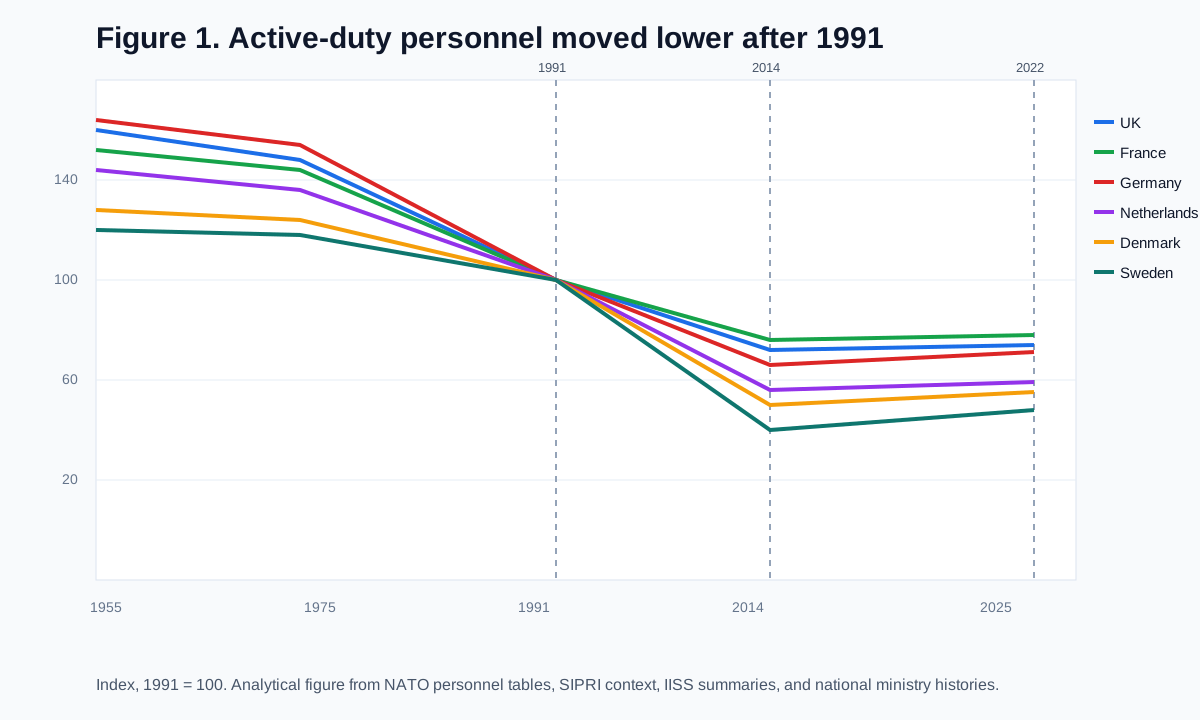
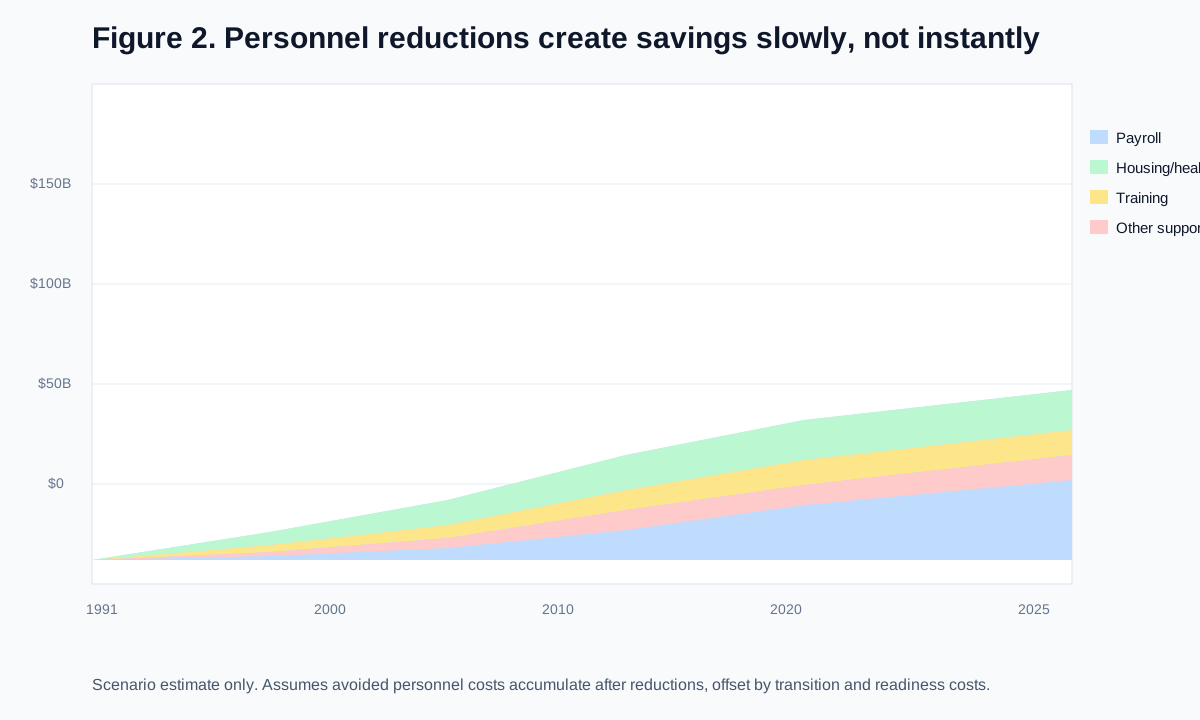
The European experience helps frame the danger and the appeal. After the Cold War, many NATO countries reduced active-duty personnel and leaned harder into professionalization, technology, and alliance assumptions. Figure 1 shows the broad shape of that post-1991 contraction. The savings case is real, and Figure 2 shows why finance ministries notice it. But the reversals after Russia's 2014 seizure of Crimea and especially after the 2022 full-scale invasion of Ukraine are the warning label: a smaller force only works if reserves, industry, logistics, munitions, and alliances can carry the missing mass.
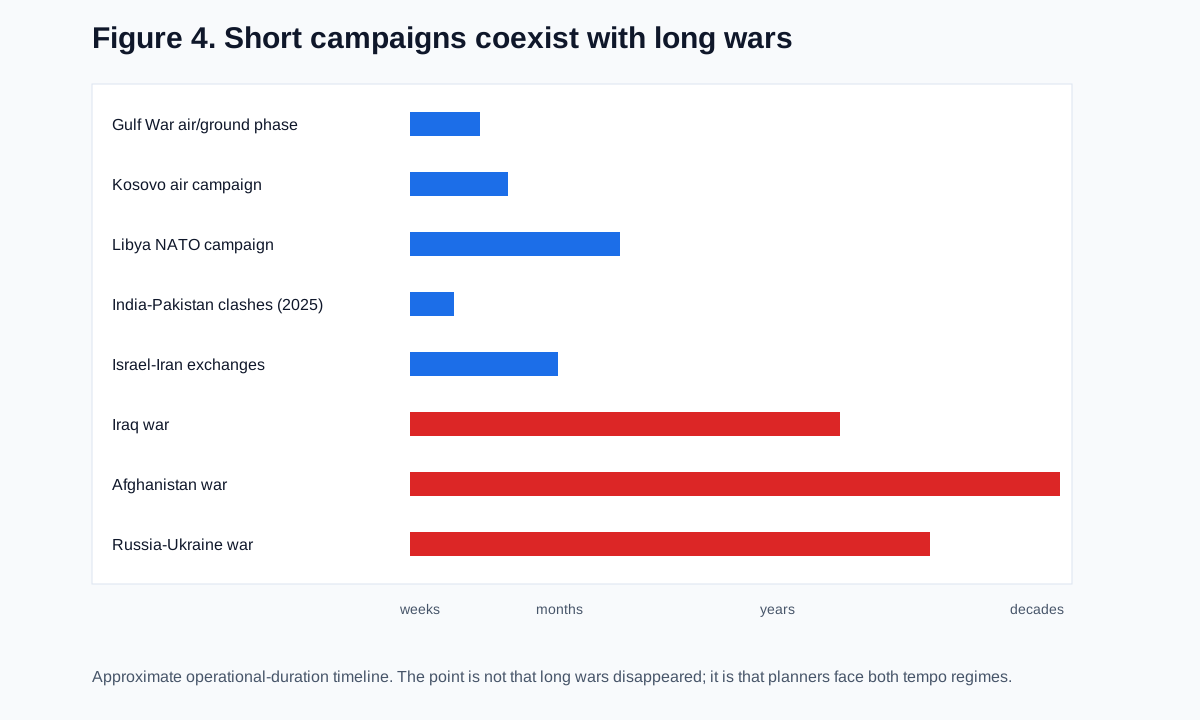
The ceasefire with Iran also revives the argument that some modern conflicts pass through decisive phases quickly. The Gulf War, Kosovo, Libya, the 2025 India-Pakistan clashes, and the Israel-Iran exchanges are often cited by people who believe precision strike, airpower, intelligence, and diplomatic pressure can compress the calendar. Figure 4 captures that short-war temptation. But Iraq, Afghanistan, and Russia-Ukraine sit on the same timeline for a reason. Long wars have not disappeared; they have become easier to underestimate.
For labor-market watchers, the practical test is job mix. A genuine cooling pattern would show up in fewer broad enlistment pushes, softer recruiter demand, less surge contracting, or fewer postings tied to expeditionary operations. A transformation pattern would look different: steady or rising demand for maintainers, analysts, software specialists, electronic warfare operators, logistics planners, shipyard labor, AI talent, and space or cyber personnel even if some conventional accession pressure eases.
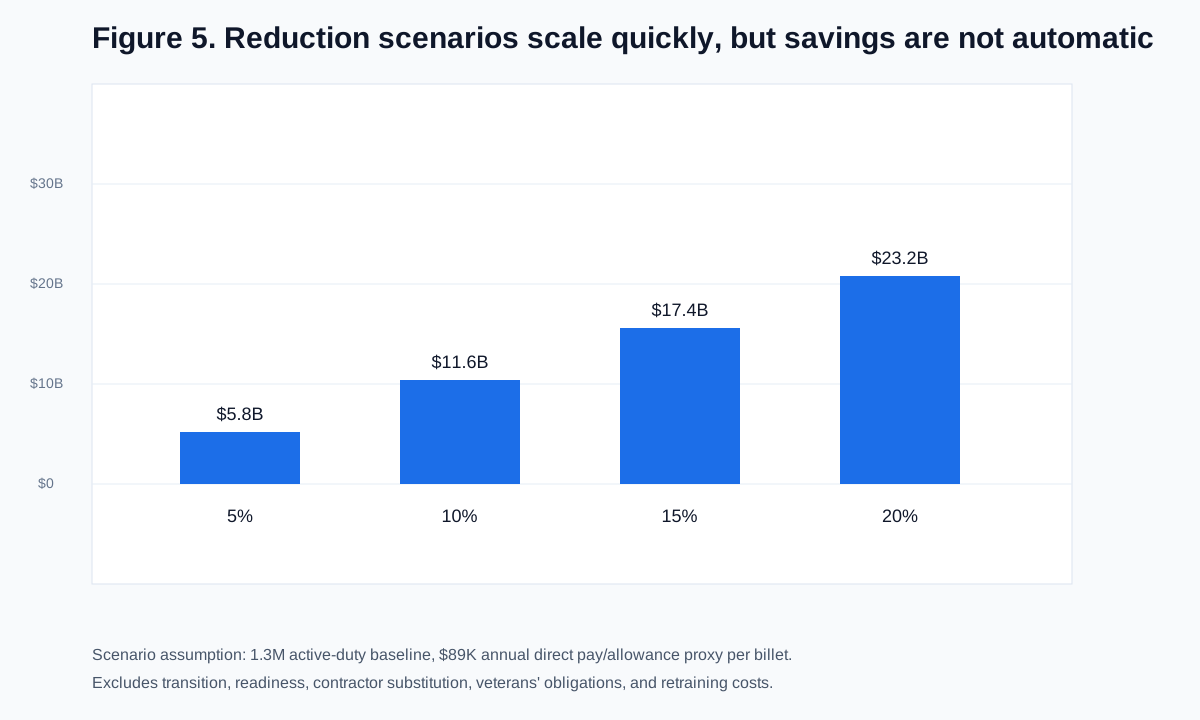
The fiscal argument is unavoidable. Military personnel costs include pay, housing, healthcare, retirement, training, and veterans' obligations. The Congressional Budget Office has put total military compensation in the hundreds of billions of dollars when Defense Department and veterans' benefits are viewed together. Figure 5 sketches why even modest personnel changes attract attention. But the chart should not be read as a promise of easy savings. Separations, retraining, readiness risk, contractor substitution, and benefit obligations can swallow a lot of the near-term upside.
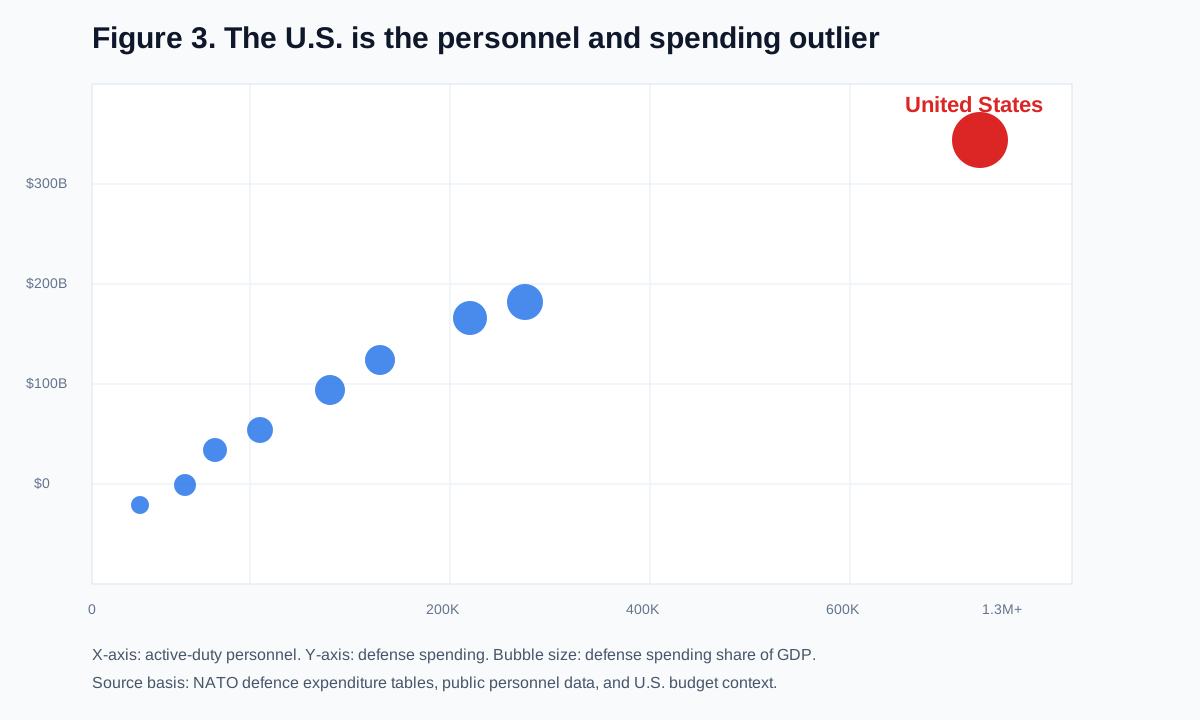
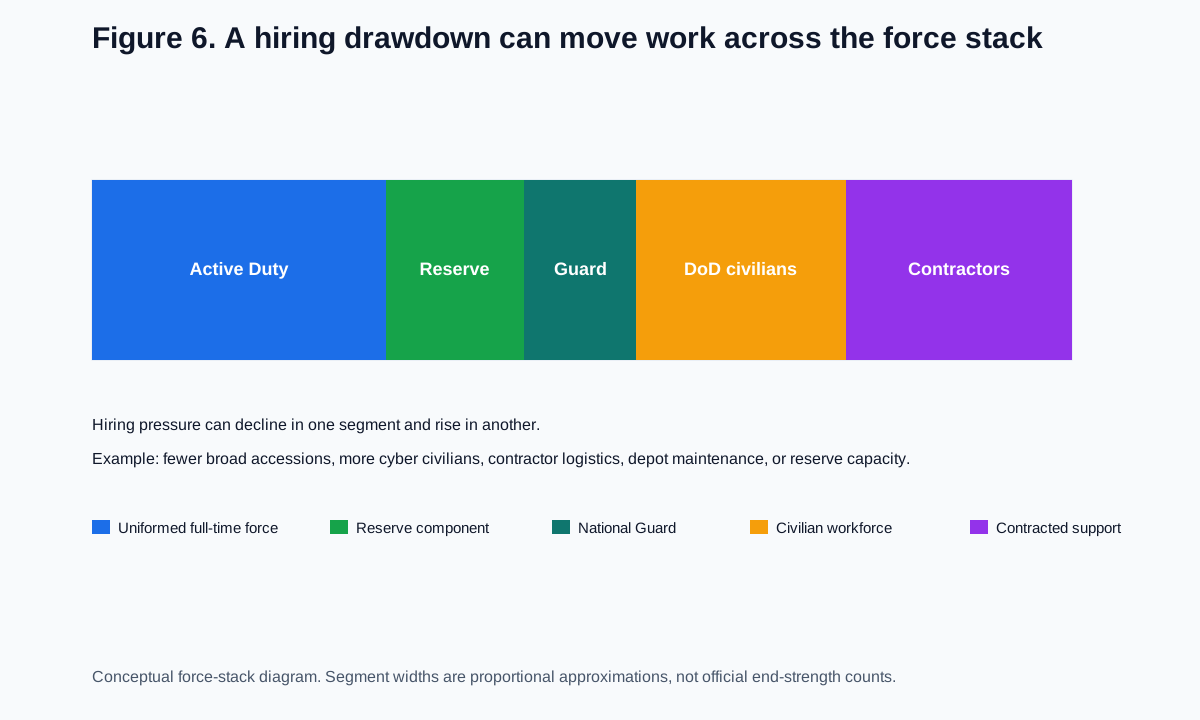
The broader defense workforce also complicates the word 'drawdown.' Figure 6 shows the active-duty force as only one layer of a larger stack that includes reserve components, the National Guard, DoD civilians, and contractors. Work can move across that stack without disappearing. A smaller uniformed hiring class can still coincide with more civilian technical hiring, more depot work, more contractor logistics, or more reserve reliance.
FreeJobData's read is cautious: the ceasefire creates space for a drawdown debate, not proof that a drawdown is happening. The key labor-market question is shifting from 'How many people should the military recruit?' to 'Which jobs should the military stop filling by habit, which should it protect, and which technical pipelines should it grow before the next crisis arrives?' The next signal will come from accession targets, recruiter staffing, defense civilian hiring, contractor solicitations, and occupational-level demand across cyber, ISR, logistics, maintenance, autonomous systems, and precision-strike support.
Figures
Sources
- AP on the U.S.-Iran ceasefire framework and pending formal signing
- Department of Defense report on fiscal 2025 recruiting results
- Department of Defense recruiting task force update on the 2025 enlistment surge
- GovInfo copy of CBO Atlas of Military Compensation, 2024
- Department of Defense fiscal 2024 military composite pay rates
- NATO defence expenditure reports and personnel data
- NATO Defence Expenditure of NATO Countries, 2014-2025
- SIPRI Military Expenditure Database